
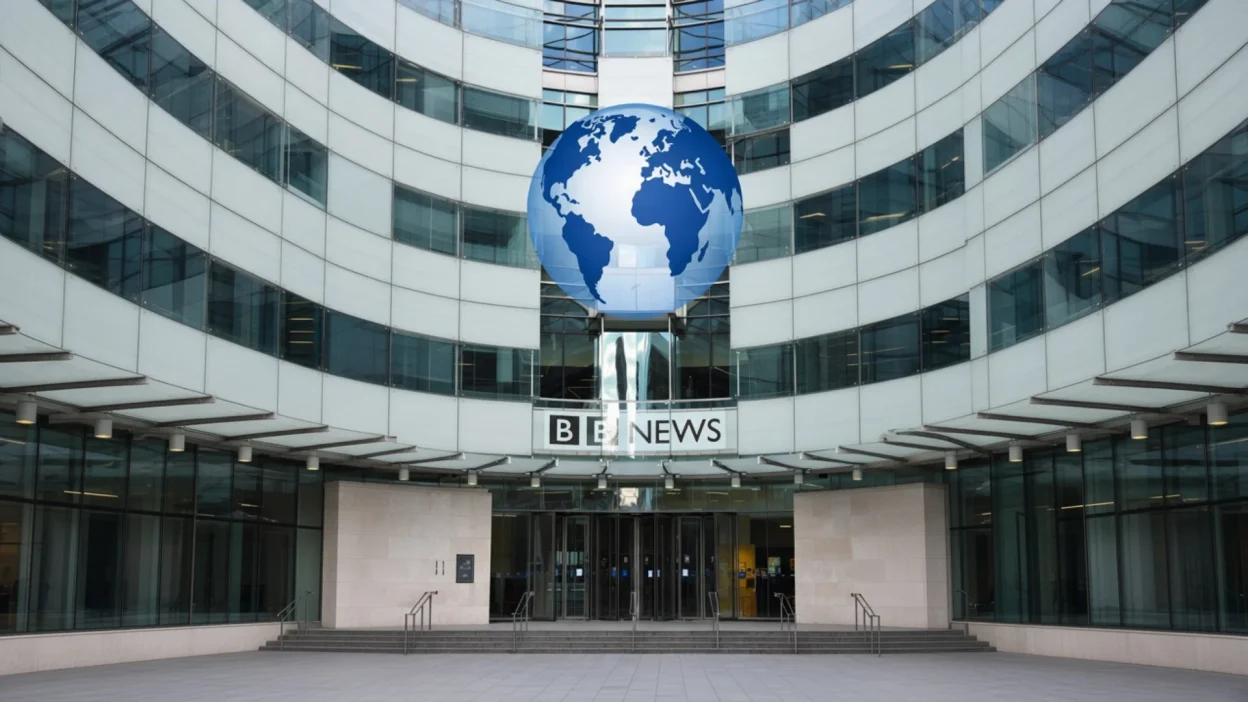
BBC News stands as one of the most recognized and trusted news organizations in the world. As the news division of the British Broadcasting Corporation, it reaches hundreds of millions of people every week across television, radio, and digital platforms. In an era of misinformation and declining trust in media, BBC News has maintained a reputation for impartiality, accuracy, and independence that few competitors can match.
This article examines the scale of BBC News operations, its editorial principles, its digital transformation, and the challenges it faces in a rapidly changing media landscape.
The Scale of BBC News Operations
Record-Breaking Global Audience
BBC News has achieved unprecedented audience growth. In 2026, the BBC announced that its global audience had surpassed half a billion people for the first time since contemporary records began. Across BBC News, the World Service, and content distributed by BBC Studios, the international audience grew to 502 million people weekly — an 11% year-on-year increase .
BBC News itself reached 467 million people weekly, representing growth of nearly 50 million . This growth was driven largely by the division’s digital transformation combined with significant news events that drew audiences worldwide.
English-Language Reach
The BBC’s news output in English — spanning World Service English, BBC.com, and the BBC News channel — grew to 208 million people weekly, up 5% year-on-year . This makes English-language BBC News one of the most widely consumed news products on the planet.
Key International Markets
BBC News‘ largest international market is India, where audiences grew to an average of 74 million people weekly. This is followed by the United States, Nigeria, Iran, and Tanzania . The service’s ability to reach audiences in diverse markets reflects its global editorial perspective and multilingual approach.
Trust and Editorial Principles
The World’s Most Trusted International News Provider
The BBC remains the most trusted international news provider globally and ranks first for reliability and independence . This trust is built on a commitment to impartiality that has been central to the BBC’s mission since its founding.
Jonathan Munro, Interim CEO of BBC News and Current Affairs, emphasized this commitment: “We have consistently delivered distinctive and impartial coverage and, importantly, retained our position as the most trusted news provider in the UK and around the world” .
Impartiality in Practice
BBC News’ editorial approach is guided by the principle that “nation shall speak truth unto nation” . This motto reflects the organization’s commitment to providing accurate, independent journalism free from government or commercial influence.
In the UK, 45% of adults think the BBC is effective at providing news and current affairs that is impartial . While this figure suggests room for improvement, it remains significantly higher than trust levels for many competing news sources.
Accuracy and Reliability
Public perception of BBC News accuracy remains strong. Among UK adults, 56% think the BBC is effective at providing accurate news and current affairs . Among regular users of BBC News content, 70% rate it highly for accuracy across TV, radio, and online platforms .
UK Audience Performance
Weekly Reach in the UK
BBC News maintains a dominant position in its home market. In 2025/26, 72% of UK adults used BBC News services on average per week . This represents nearly three-quarters of the adult population relying on BBC News for information.
Digital Engagement
BBC News Online reaches 34% of UK adults weekly, with an average of 11.3 million weekly active accounts . The platform’s digital reach has remained stable year-on-year, demonstrating the continued relevance of BBC News’ online offering.
Perceived Effectiveness
Public assessment of BBC News’ performance is largely positive. 63% of UK adults think BBC News and Current Affairs is effective at helping them understand what is happening in the UK and the world . For local news, 57% believe it is effective at helping them understand what is happening in their part of the UK .
Global Services and Languages
BBC World Service
The BBC World Service is the BBC’s international broadcaster, delivering programmes and services on radio, TV, and digital platforms globally. It operates in 45 languages, including English, and has journalists and supporting staff in 64 cities across 53 countries .
The World Service is primarily funded from the UK licence fee, with additional grants from the UK’s Foreign, Commonwealth and Development Office (FCDO) . It is considered one of the UK’s most important cultural exports, informing and inspiring people across the globe.
Regional Language Services
News operates language-specific services that have shown remarkable growth.
BBC News Ukrainian saw its reach more than triple, reaching more than one in five adults throughout Ukraine .
News Persian reaches nearly 25 million people and is the largest Persian-language media outlet outside Iran .
BBC News Brasil and News Mundo grew their audiences substantially — up 58% and 40% respectively — with increases mainly attributed to TikTok and Instagram . This demonstrates BBC News’ ability to adapt to platform-specific content consumption habits.
Innovation in Language Services
In June 2026, the World Service launched BBC News Polska, its first new language offer to embed AI translation technology into its journalism . The pilot service delivers AI-assisted translation of curated BBC reporting alongside original journalism, always with human oversight . This represents an innovative approach to countering disinformation while expanding language reach.
Digital Transformation
The New BBC.com and App
BBC Studios, the commercial arm of the BBC, launched a redesigned BBC.com and a new BBC app globally in 2026 . The new website and app feature updated design and navigation, offering impartial journalism with a premium commercial offering .
The redesigned website includes a mix of the biggest global news stories and curated features, with sections covering news from Africa, Asia, Australia, Europe, Latin America, and the Middle East . The new BBC app replaces the International BBC News app, bringing together content from across the BBC including business, innovation, culture, travel, earth, news, sport, and live coverage .
YouTube and Social Media Growth
BBC News’ digital transformation has delivered strong results on social platforms. On YouTube, subscribers to the BBC News channel increased by approximately 1.9 million in the last year, with 21% of views coming from the UK .
The service has also seen significant growth on TikTok and Instagram, particularly for its regional language services. BBC News Brasil and BBC News Mundo attributed their audience growth primarily to these platforms .
Streaming and On-Demand
BBC News has invested in better curation and formats tailored to streaming platforms. The BBC has seen an increase in news content viewed on iPlayer after investing in streaming single-story videos and improving curation . 83% of weekly users rate iPlayer as effective at helping the BBC deliver its news purpose .
Investigative Journalism and Impact
Award-Winning Investigations
BBC News’ investigative journalism has thrived, with hard-hitting exposés making a real difference to people’s lives. At the RTS Television Journalism Awards 2026, the BBC took home more awards than any other media provider, winning seven awards out of 20 categories .
The BBC also won best current affairs documentary at the Grierson Awards for Life and Death in Gaza from BBC Eye and Storyville .
Breaking Major Stories
BBC News continues to break the biggest stories, bringing audiences the latest UK and international news. In February 2026, the BBC broke the news that Andrew Mountbatten-Windsor had been arrested at his home on the Sandringham Estate .
Local Journalism and Community Impact
BBC News’ commitment to local journalism is demonstrated through initiatives like the Local Democracy Reporting Scheme (LDRS) , which reached the milestone of delivering half a million stories since its launch . This scheme ensures consistent, transparent reporting on council decisions, planning applications, and local issues that support democracy and society.
Coverage of local issues has driven significant engagement. The BBC’s “Bin Day” coverage, built around original data journalism on waste collection targets, received more than 2.4 million online page views . “Farmwatch,” which included data journalism on rural crime, achieved more than 500,000 page views .
Newsround and Younger Audiences
BBC News’ commitment to younger audiences is exemplified by Newsround, which reaches 3.5 million children on average per week in term time . Newsround is the most trusted news source for 7-12 year olds and strengthens children’s understanding of the world, supporting civic engagement and social cohesion .
In a landscape dominated by social media and misinformation, Newsround and BBC News have continued to provide essential, child-appropriate journalism for the younger generation .
The BBC News Channel
Evolution of the Channel
The BBC News channel has undergone significant evolution. Originally launched as BBC News 24 in 1997, it was rebranded as BBC News in 2008 as part of an effort to create a unified brand across all platforms . In April 2023, BBC World News merged with the domestic BBC News channel to form a single entity known as BBC News .
International Focus
The BBC News channel broadcasts in English 24 hours a day in many countries across the world . BBC Studios secures commercial revenues from the channel outside the UK through advertising and distribution, returning funding to the BBC for reinvestment .
Programming and Presentation
The channel’s presentation has evolved to reflect the unified BBC News brand, with the new logo introduced in 2022 and the merger with World News in 2023 . The formatting follows the BBC’s design language introduced in October 2021, with most top-of-the-hour bulletins coming from Studio C .
Challenges and the Future
Financial Pressures
BBC News faces significant financial challenges. In June 2026, the BBC announced savings plans that include closing some linear programmes and making fewer editions of others . On Radio 4, programmes including The World Tonight, Midnight News, Money Box Live, AntiSocial, The Law Show, and Crossing Continents will close .
The BBC World Service will also close The Inquiry, The Conversation, and The Fifth Floor by the end of the year . These cuts reflect the difficult financial situation facing the organization.
Review of On-Air Roles
The BBC is carrying out a review of its chief presenter roles to ensure it has the right number of presenters deployed as flexibly and efficiently as possible . The Today programme will move to a roster of four permanent presenters rather than five and will move to a single anchor format on Saturdays .
Digital Prioritisation
In line with refocused digital priorities, the BBC is proposing to reduce the number of correspondents, producers, and reporters working on linear output within its Story Teams . The organization will make greater use of mobile technology, using fewer crews to film stories .
Global Strategy
The BBC is building further on the News Channel’s audience growth outside the UK by tailoring its agenda more to an international focus . These changes will allow the BBC to pursue opportunities to raise more revenue from the News Channel’s global footprint .
Media Literacy and Countering Disinformation
The BBC has identified media literacy as a critical priority. Research finds that 60% of teachers have appetite for more resources to help children identify misinformation, and 56% want more resources for identifying reliable sources . More than seven in ten parents (72%) are concerned that their child would be unable to distinguish between real and fake content online .
The BBC provides resources such as Bitesize Other Side of the Story to help children navigate fake news and misinformation, and embeds media literacy themes into content across its platforms .
Conclusion
BBC News remains a cornerstone of global journalism, reaching over 467 million people weekly with impartial, accurate, and independent reporting . Its commitment to truth and public service, combined with significant digital transformation, has allowed it to maintain its position as the world’s most trusted international news provider .
The challenges facing BBC News — financial pressures, changing consumption habits, and the need to combat misinformation — are substantial. Yet the organization’s track record of innovation, its investment in digital platforms, and its unwavering commitment to editorial independence position it well for the future.
As the BBC’s motto states, “nation shall speak peace unto nation” . In an increasingly divided world, that mission — to provide trusted news that helps people understand the world around them — has never been more important.